
Single person test
€595 All inclusive, including VAT. €695 in Cork, Limerick, Galway, Athlone and Sligo- One examinee, up to 2 hours
- 3 specific issue questions
- Profiling questions included
- Written report within 24 hours
Private, confidential polygraph examinations at controlled offices across Ireland and Northern Ireland, from €595 all inclusive. Free consultation, APA-accredited examiner, and a detailed written report within 24 hours.
Leave a name and a number and we will ring you back during helpline hours. The consultation is free and there is no obligation to book.
Most people who call us have never arranged a polygraph examination before. Here is what happens before any money changes hands.
Not every situation suits a polygraph. On the free consultation we will tell you plainly if we think an examination will not give you what you are looking for.
The quoted fee covers the consultation, the examination, travel and the written report. Nothing is added afterwards.
Results go to the client and nobody else. We do not discuss your case, and nothing is released without your written instruction.
Every examination is built around one specific issue, agreed with you in advance. Whatever the subject, the format and the price are the same.
Where suspicion has taken hold and talking has stopped working, a specific-issue examination gives a clear answer on a defined question rather than another argument.
Being accused of something you did not do is difficult to disprove. A properly conducted examination produces documented evidence you can put in front of others.
Where stock, cash or information has gone missing and the pool of people involved is small, testing narrows the question quickly and discreetly.
Verify what a candidate has told you about their history, before you hand over keys, cash handling or access to sensitive information.
Substance use, money going missing at home, or a dispute between relatives that has hardened into two irreconcilable accounts.
Periodic maintenance testing used by families, treatment programmes and supervising professionals to monitor compliance over time.
Before you book with anyone, verify their examiner directly with the governing bodies. Ours are accredited by both.
 American Polygraph Association
 British Polygraph Society
From the first phone call to the written report, this is the whole process.
Call the helpline and talk it through with no obligation. We will tell you whether an examination suits your situation and what it can and cannot establish.
Questions must be specific, close-ended and about facts rather than opinions or beliefs. Our team refines the wording with you before the test date.
A €125 booking fee secures the examiner, the venue and your slot. The rest of the price is the examiner’s fee, paid directly to the examiner.
On the day the examiner explains the process, reviews each question with the examinee and confirms they understand and consent before anything is recorded.
The instrument records physiological responses across the agreed question set. Allow up to two hours from arrival to finish.
The examiner scores the charts and gives you the result the same day, followed by a detailed written report at no extra charge.
Polygraph testing is an unregulated market in Ireland. These are the things worth checking, whoever you end up booking with.
Every examination is conducted by an examiner accredited by the American Polygraph Association and the British Polygraph Society.
The quoted fee covers the consultation, the examination, travel and the written report. There is nothing to add afterwards.
A detailed written report is provided as standard, not as a paid extra, and is yours to use as you see fit.
Results are released to the client only. Nothing is shared with anyone else without your written instruction.
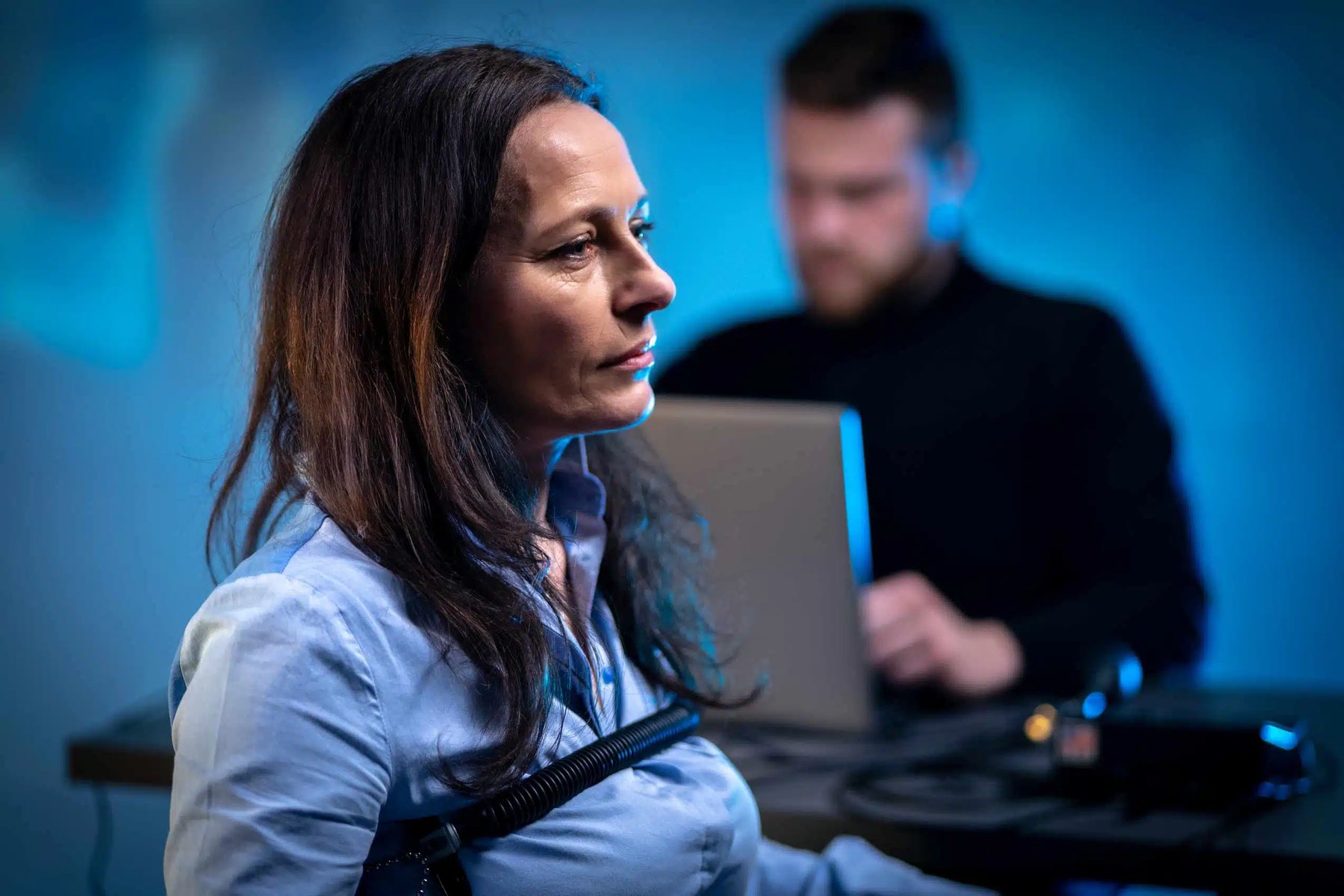
A polygraph is not a general enquiry into someone’s character. It answers a small number of specific, factual questions that you agree with us before the day. That is why the wording matters as much as the instrument, and why we spend time on it with you first.
Accuracy is a property of the whole examination, not just the machine.
One all-inclusive fee per test, including VAT. There is nothing to add afterwards.
Booking deposit
A €125 booking fee is paid to us per test at the time of booking. It covers the pre-examination assessment of your case and arranging your examination; the rest of the price is the examiner’s fee, paid directly to the examiner at least 48 hours before the test.
The six we are asked most often. There are more on the FAQ page.
The polygraph examination uses instrumentation that measures a range of physical responses while a set of agreed questions is put to the examinee. Those recordings are then analysed by a trained examiner, who scores the charts and reaches a conclusion.
A single test is €595 all inclusive at most of our offices, and €695 in Cork, Limerick, Galway, Athlone and Sligo, because the examiner travels a full day to reach those offices. Couples are €840 and groups of three or more €350 per person, the same everywhere. The full list is on our prices page. Whoever you book with, we would encourage you to verify the examiner’s credentials directly with the American Polygraph Association or the British Polygraph Society before you pay anything.
The €125 booking fee pays for our work: reviewing your case and the examinee’s suitability, and arranging your examiner and venue. That work starts as soon as you book. You can still cancel within 14 days of booking: if neither part of the assessment has been done you get the fee back in full, and for each part already done we keep half. Once the assessment is complete — your questionnaire reviewed and your appointment confirmed with an examiner — the fee is non-refundable. Section 4 of the terms and conditions sets this out.
With proper protocols, current technology and an experienced examiner, an achievable 98% accuracy is the standard we work to. Accuracy depends on the examination being run correctly, which is why the pre-test assessment and question wording matter as much as the instrument.
Yes, and most clients do. Questions must be specific, close-ended and about matters of fact rather than opinions or beliefs. Our support team will refine the wording with you before the test so each question can be answered properly.
A standard test lasts two hours and covers one to three specific issue questions. Questions beyond that generally belong to a separate test case, which we would discuss with you rather than add on the day.
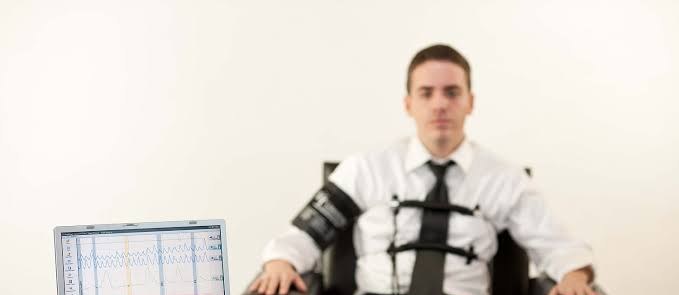
A polygraph examination records physiological responses — breathing, cardiovascular activity and electrodermal activity — while an examiner puts a short, agreed set of questions to the examinee. Those charts are then scored against a recognised methodology. The instrument does not detect lies on its own; the examiner’s training, the question construction and the conditions on the day are what produce a defensible result.
Testing works best when there is a single, factual matter in dispute and no other way to establish what happened: an allegation of infidelity, money missing from a workplace, an accusation made against someone with no evidence either way. It works badly where the question is really about feelings, intentions or someone’s general character, because those cannot be put as answerable questions.
Nobody can be compelled to sit a polygraph examination. Every examinee must consent freely and in writing after the process has been explained to them, and may stop at any point. If you are arranging a test for someone else — a partner, a member of staff — talk to us first about how to raise it properly.
We hold controlled offices in Dublin, Cork, Limerick, Galway, Athlone, Drogheda and Belfast, and arrange residential testing where travelling to an office is not practical. Office testing runs Monday to Friday, 9am to 5pm; residential appointments can extend into evenings and weekends.
Background reading on how testing works and where it helps.

A stepfather in Galway City, accused by his step-daughter of abuse she said began when she was seven, contacted us and booked a polygraph…
Read the article
When three grandsons inherited their grandmother’s Limerick house, two of them were shocked by how little of the sale money reached them. This Lie…
Read the article
When Helen discovered that her late grandfather’s will had been changed months before he died, leaving her, her brother and her cousin far less…
Read the articleThe consultation is free and takes about ten minutes. We will tell you honestly whether an examination is the right step before you commit to anything.